
EasySource: Redefining Talent Sourcing with AI Automation
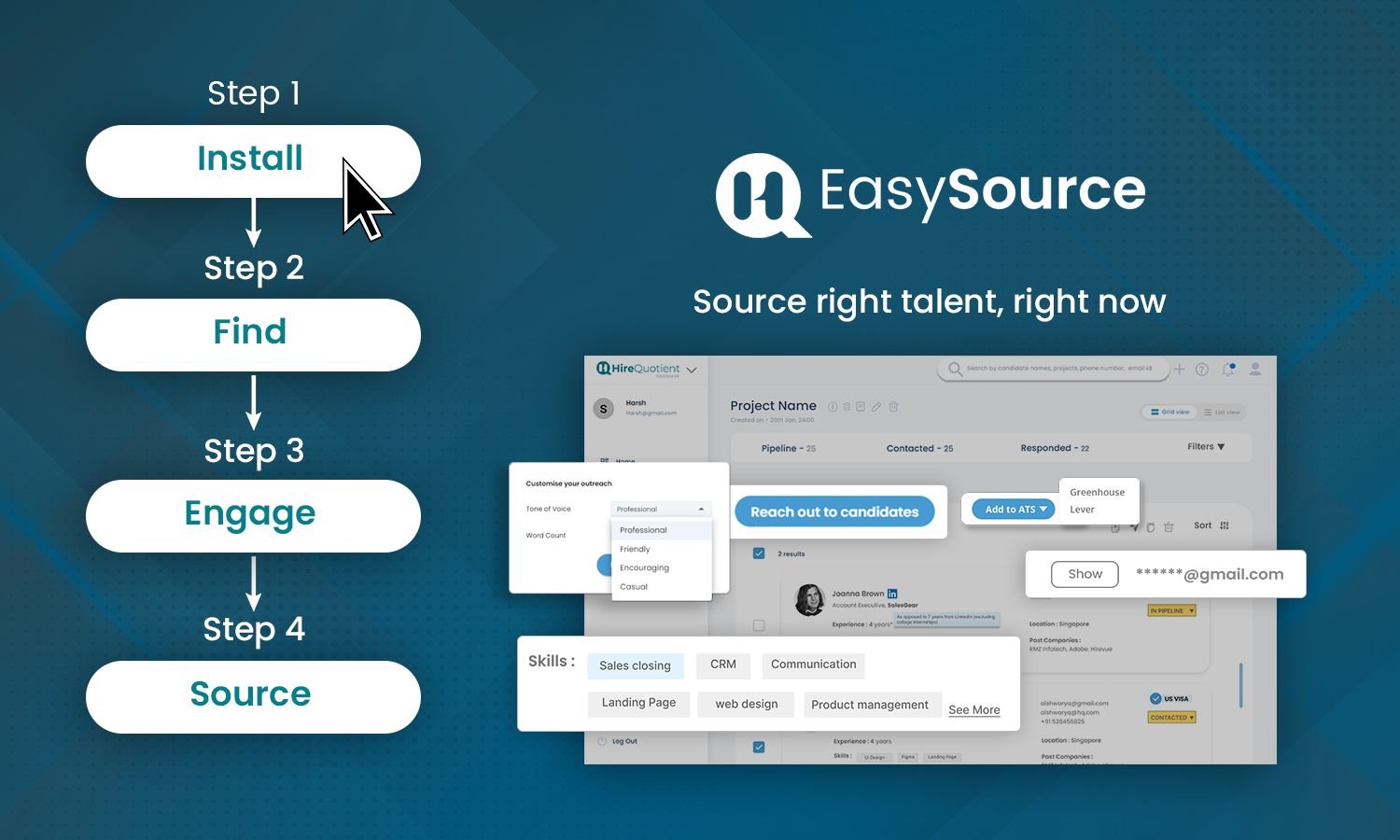
This project was executed within a lean, high-velocity team environment where I served as the foundational design lead, driving both product strategy and execution.My role involved leading the cross-functional process from discovery to delivery. I partnered closely with the Product Manager to translate PRD requirements into actionable design features, leveraging formative research (brainstorming, ideation, and user interviews) to ensure our Interaction Designmaximized market fit and delivered core business metrics (Time-to-Hire and Cost-per-Hire).
Role
Senior UX/UI Designer (Founding Design Lead)
Client
EasySource by HireQuotient
Live Site
lenspex.in
Timeline
Focused Development & Iteration (Implied 3-Month Launch Cycle)
Company Focus:
HR Tech specializing in Non-Tech Hiring (Raised $1.8M in pre-seed funding)
Target Users:
Talent Acquisition Specialists, Sourcing Specialists, Recruiters, and HR Managers
The Strategic Challenge: Disrupting the Staffing Industry
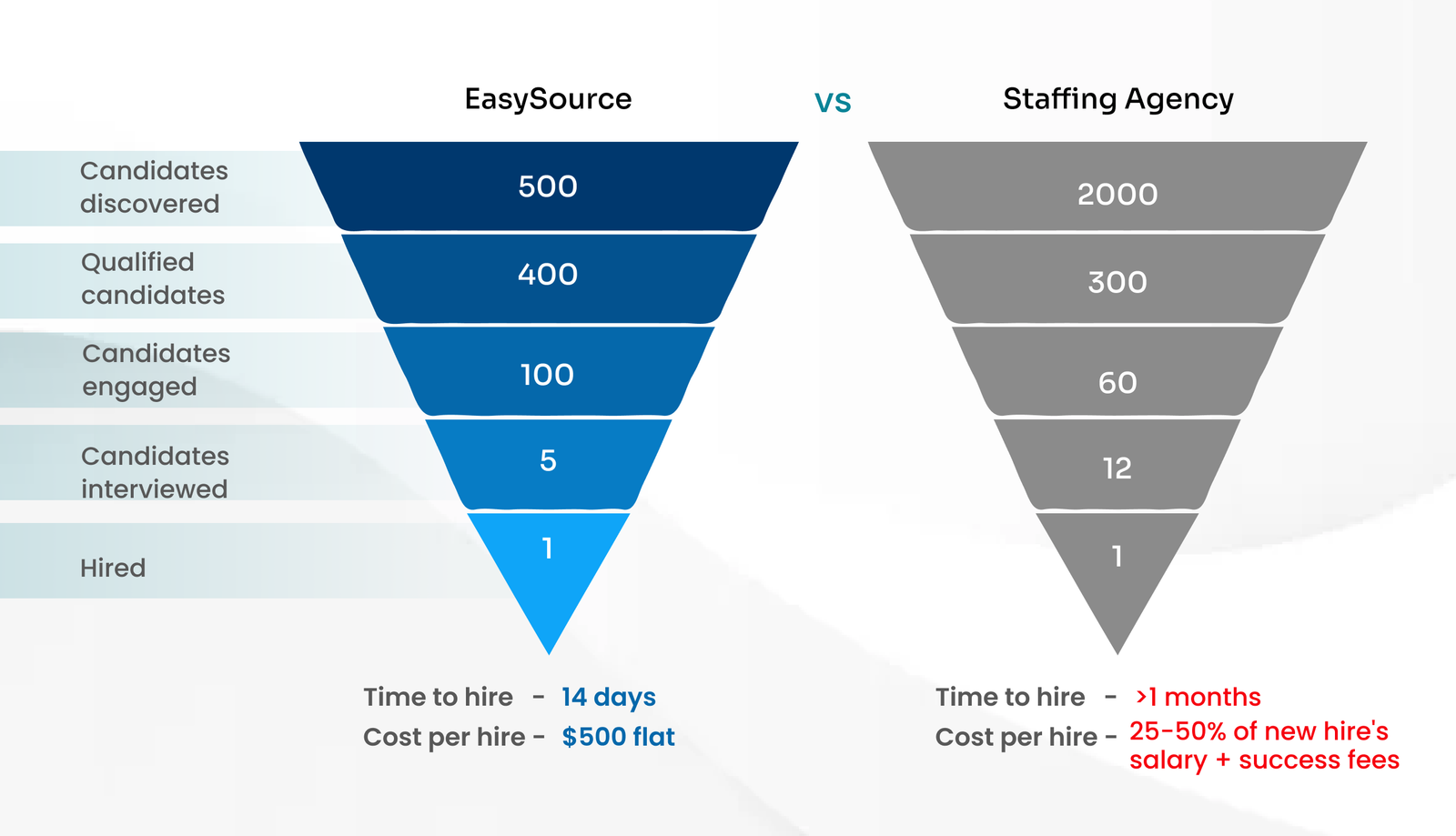
We identified a major market opportunity to bypass the prohibitive costs and speed constraints of traditional staffing agencies. The challenge was not just building a feature, but building a disruptive B2B platform that could
1. Solve for Cost & Speed:
Directly address the industry-wide burden of 25-50% salary fees and time-to-hire exceeding one month.
2. Transform Workflow: Replace manual candidate search and outreach with a fully automated, AI-driven process, solving the efficiency gap created by 46% manual recruiter workload.
3. Access Passive Talent Pool: Directly tap into the vast pool of high-quality passive candidates (who represent 70-80% of top talent) that traditional agencies and job boards largely miss due to reliance on active applicants only.
4. Reduce Bad Hire Risk: Address the massive financial impact of poor hiring decisions (costing up to 30% of first-year salary per bad hire) through AI-powered precise skills matching, cultural-fit analysis, and predictive performance scoring.
Team & Responsibilities
| Role | Contribution |
|---|---|
| UX/Product Designer | Strategic Ownership: Research synthesis, Information Architecture (IA) design, end-to-end Interaction Design, system architecture, and Design Validation. |
| Product Manager | Co-authoring theProduct Requirements Document (PRD),feature prioritization, and market alignment. |
| Design Support | Production-ready asset handoff,UI Kit management,and design QA. |
| Engineering Team | 1 Frontend Developer, 1 Backend Developer. |
Design Goals & Strategic Pillars
To solve these deep-seated problems, we established three core design principles for the EasySource user experience:
| Principle | Goal | UX Solution |
|---|---|---|
| Maximal Automation | Eliminate repetitive tasks and ensure consistent, high-volume outreach | Pre-built, customizable Workflow Builder for multi-channel sequencing. |
| Hyper-Personalization | Drive high response rates by making every candidate touchpoint highly relevant | Embedded Generative AI (ChatGPT) for contextual message drafting. |
| Intuitive Control | Consolidate all sourcing, outreach, and tracking into a single, seamless hub. | A unified Pipeline Dashboard with 4-click source-to-hire funnel |
Design Execution: The EasySource End-to-End Workflow
My design work focused on creating a seamless, high-velocity experience across the entire sourcing journey, showcasing expertise in complex B2B feature design and Information Architecture (IA).
A. High-Velocity Workflow Creation and Automation
The visual workflow builder was the cornerstone of the automation experience, designed for usability and system integrity, ensuring Minimal Human Intervention. Key Features Designed (Workflow Builder):
1. Drag-and-Drop Workflow: Users graphically structure complex outreach sequences (Email, Inmail, LinkedIn Request, Time Delay). The modular design ensures scalability and maintainability.
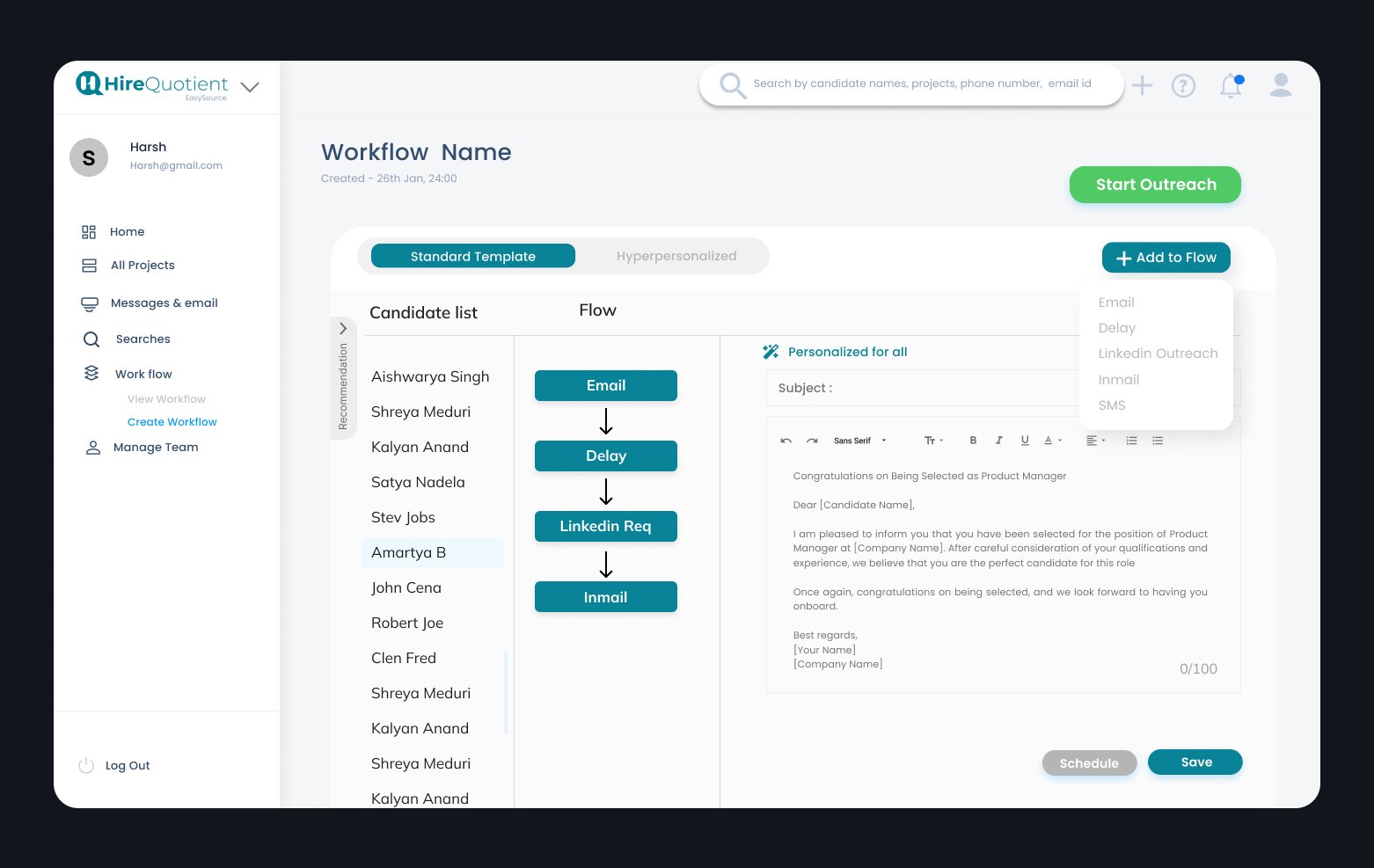
2. Contextual AI and Personalization: The Recommendation panel provides instant, AI-generated content (powered by ChatGPT), while the Personalise drop-down utilizes dynamic Design Tokens, ensuring message uniqueness at scale for Hyper-Personalized Messages.
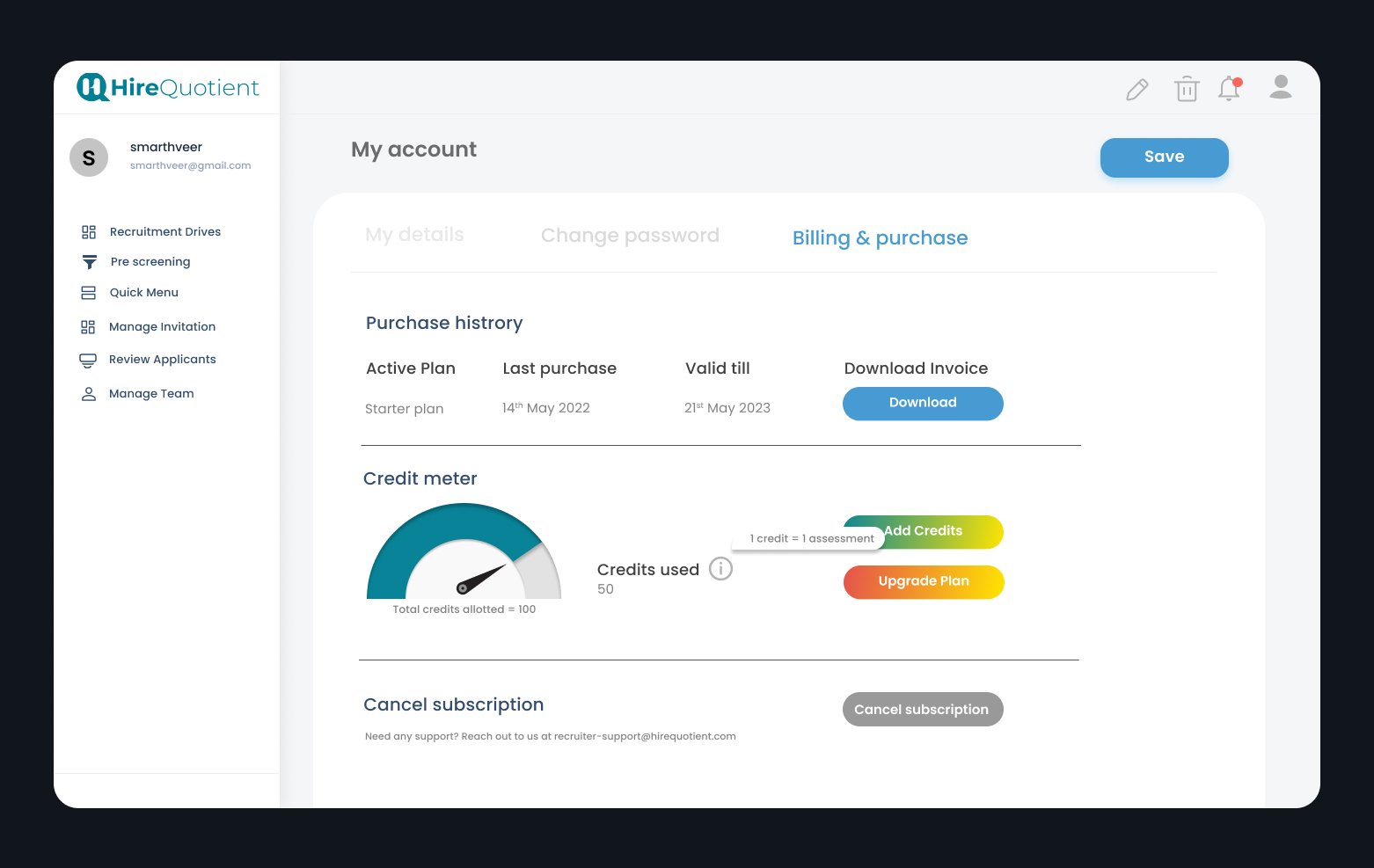
2. Gamified Adoption Flow: I integrated behavioral nudges via the 4-Step Gamification Flow for the browser extension. The"Congratulations! You won extra 50 credits"reward popup drives feature adoption by tying initial success to the product's credit-based monetization model.
Data-Driven Insight and Analytics
The Analytics Overview ensures recruiters and managers have complete visibility into their sourcing performance and ROI, shifting data from reporting to actionable intelligence through strong Data Visualization.
Key Features Designed (Analytics):
1.Deep Conversion Funnel: The Analytics Overview provides a superior, visualPipeline Funnelbreakdown, clearly showing conversion rates (Qualified Rate 60%, Response Rate 48%, Positive Response 30%)
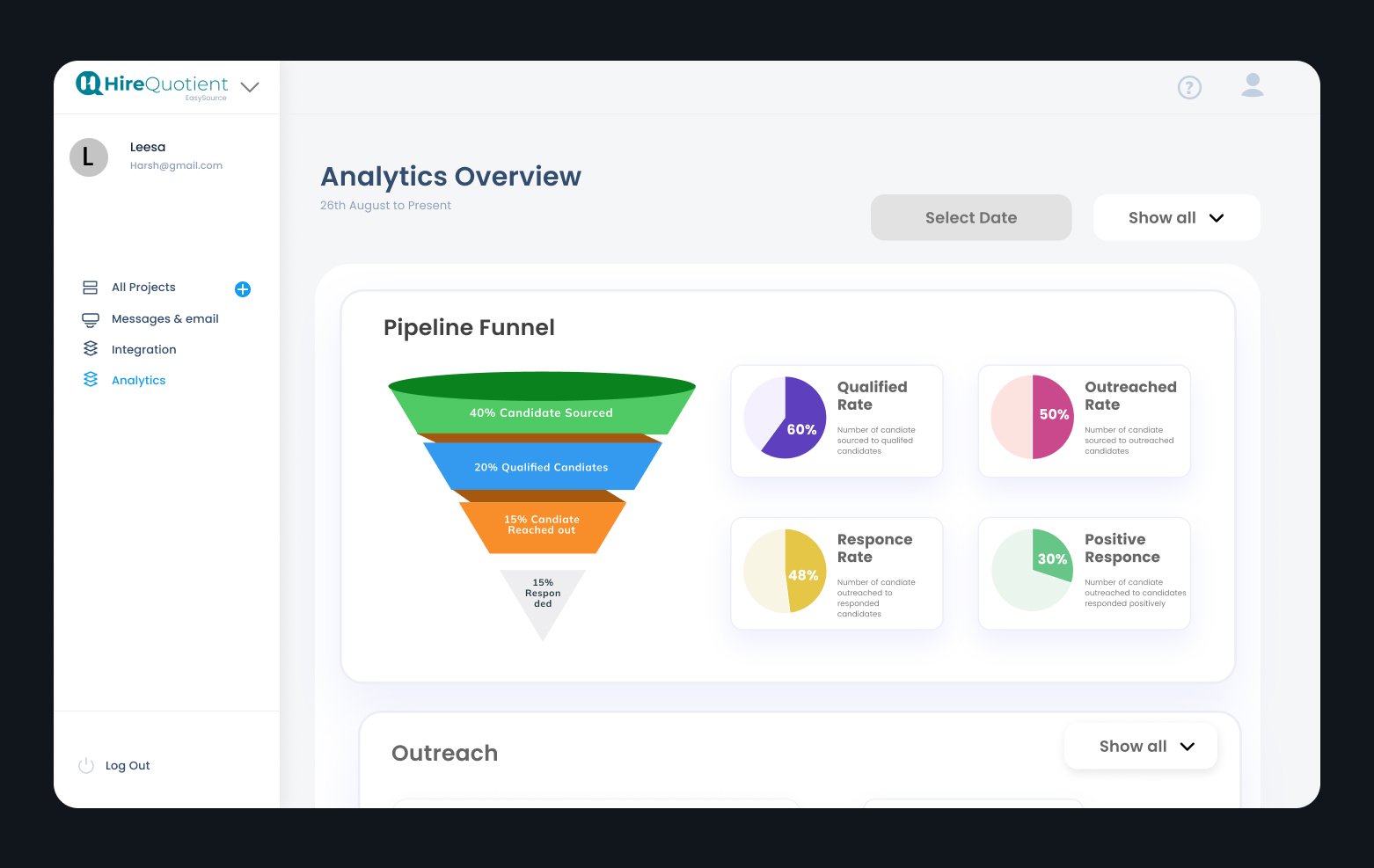
2. Performance Metrics at a Glance: Highlights the direct efficiency savings with metrics likeInterview Booked (242) and Hours Saved in recruitment Task (150 Hr). The trend lines in the overview chart visualize performance over time, essential for managerial reporting and budget planning.
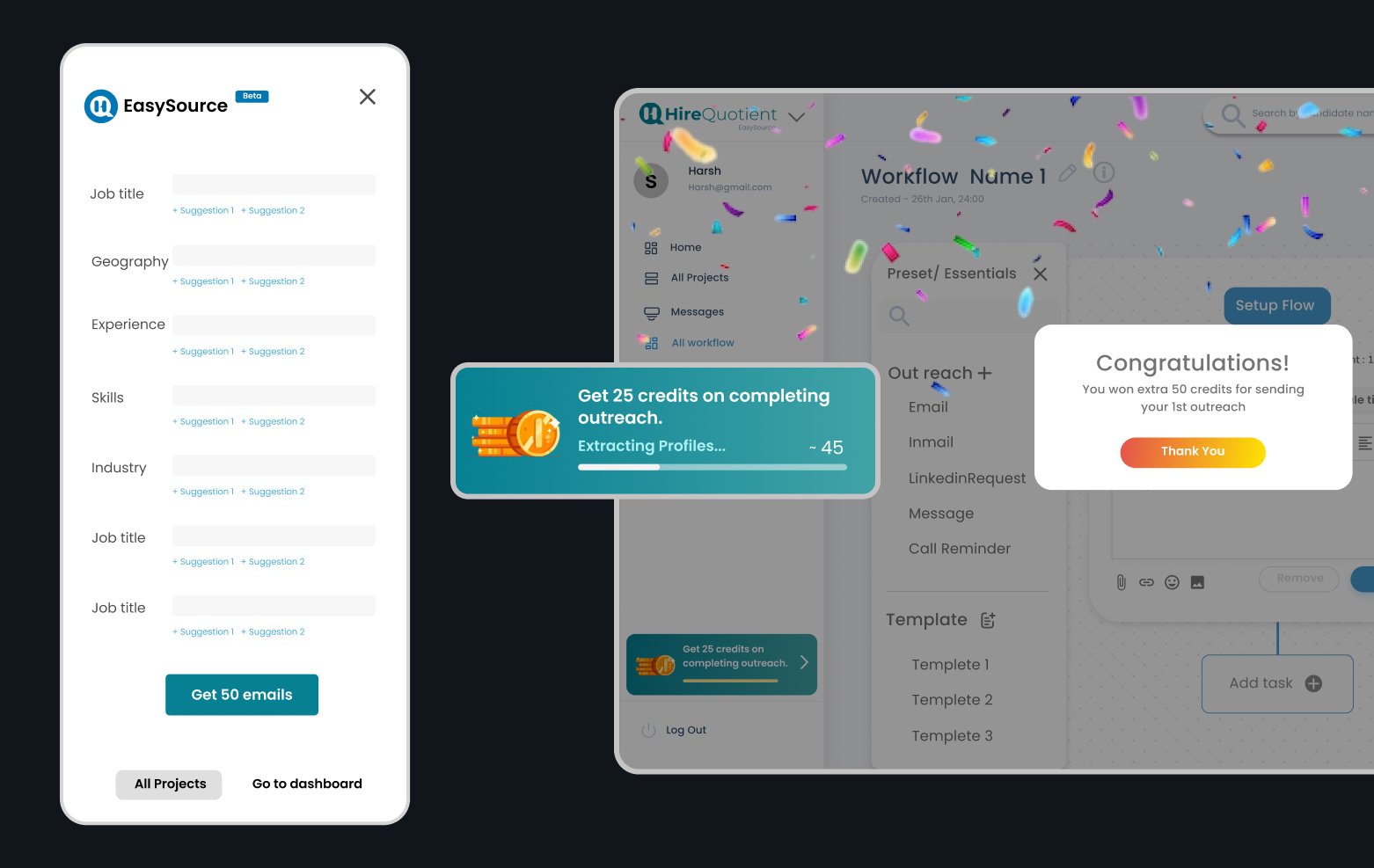
3.Monetization System Design: The Billing & Purchase screen, featuring the Credit Meter (1 credit = 1 assessment), clearly links feature usage to subscription cost, providing transparency critical for B2B procurement
Foundational Design System: HQ Core
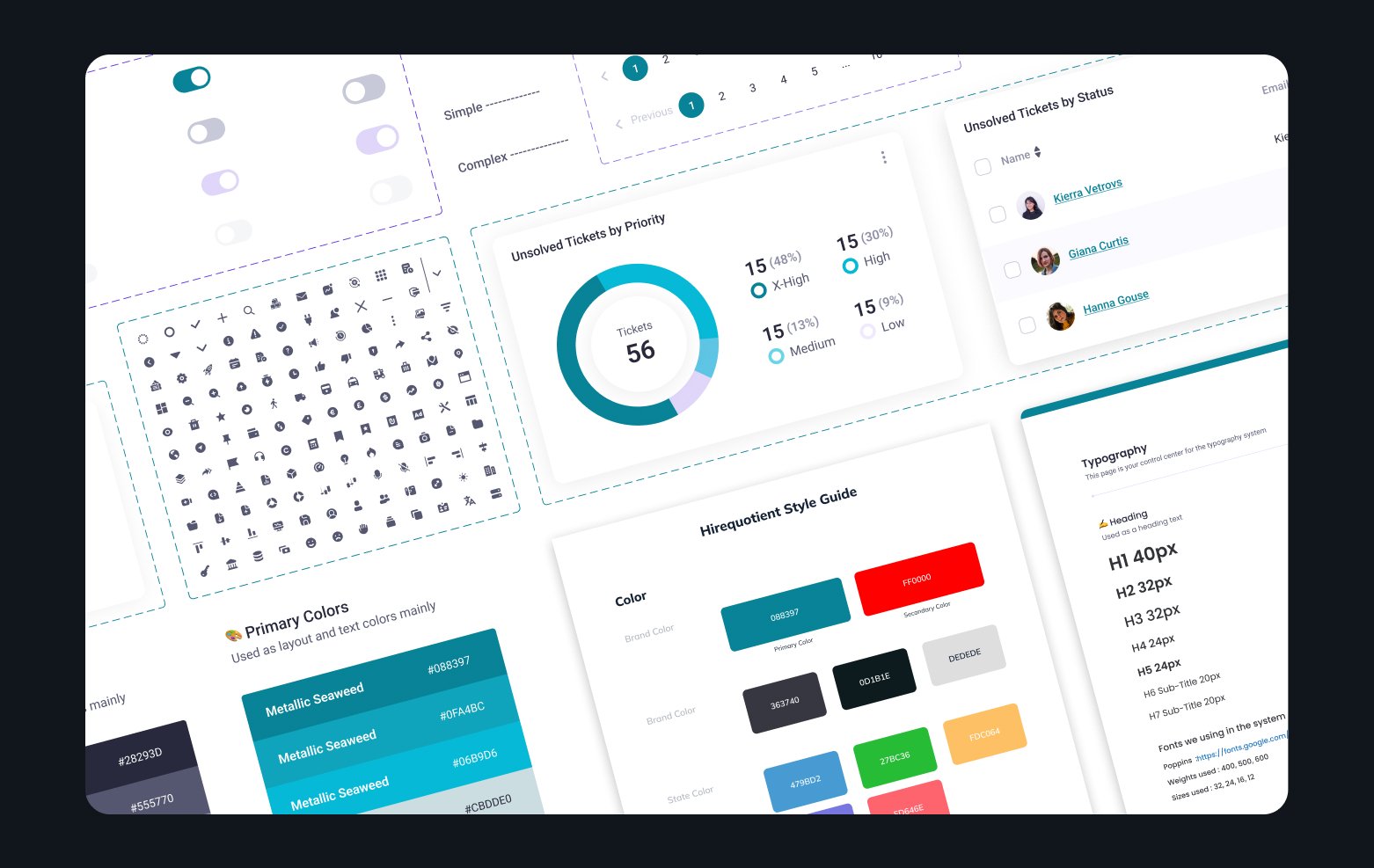
As the first designer, I recognized the need for a scalable, single source of truth to ensure consistency across the EasySource MVP and the broader HireQuotient product suite (EasyAssess, EasyInterview). I designed and established the HQ Core Design System.
Components & Scope:
1. Brand & Visual Identity: Defined core brand colors (teal/blue gradients), typography, and visual language used across the product and marketing assets.
2. UI Elements (Component Library): Created a comprehensive library of reusable components for B2B applications, including: clean data tables, the card-based layout for the candidate pipeline, interactive filters, modal windows (for billing/gamification), and standardized form fields/buttons, documented with clear specifications and usage guidelines
3. Data Visualization Library: Established rules for chart and graph usage (e.g., the Pipeline Funnel and Outreach trend lines) to ensure data was consistently clear and actionable.
3. Impact: The system allowed the lean 1:2 design-to-engineering ratio to move athigh velocity and maintain high quality, ensuring that the MVP and subsequent features like Team Management and Billingmaintained visual consistency and functional stability, leading directly to the product's rapid launch and commercial success.
Impact and Results
The design's success is validated by superior ROI and efficiency, proven against the industry norm (staffing agencies).
Quantifiable Business Impact
| Metric | EasySource Performance | Improvement vs. Staffing Agency |
|---|---|---|
| Time-to-Hire | 14 Days | Up to70% Reduction |
| Cost-per-Hire | $500 Flat Fee | Approx. 50% Reduction (vs. 25-50% salary) |
| Recruiter Efficiency | 70,000+ Hours Saved | N/A |
| Roles Closed | +30% More Roles Closed | N/A |
| Candidate Quality | 45% Better Candidate Hit-Rate | (80% qualification based on internal data) |
Market and Industry Validation
1. Rapid Adoption: Secured 200+ customers (including BCG, Lazada, and Razer) within the first three months of launch.
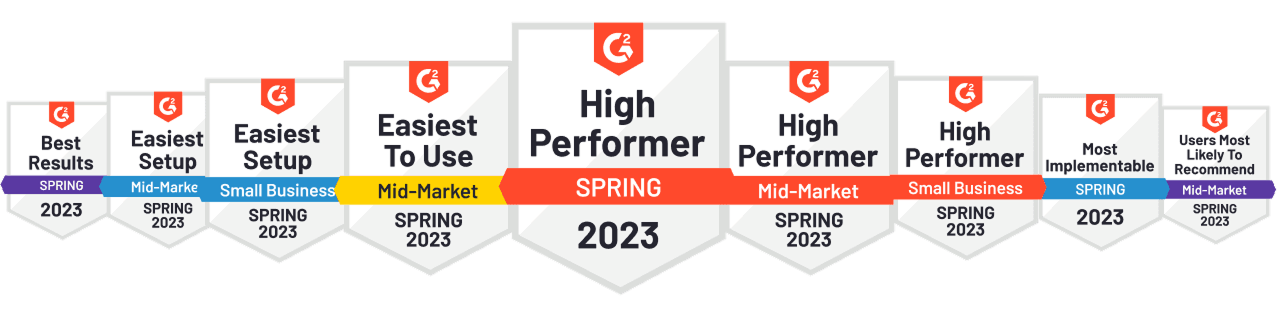
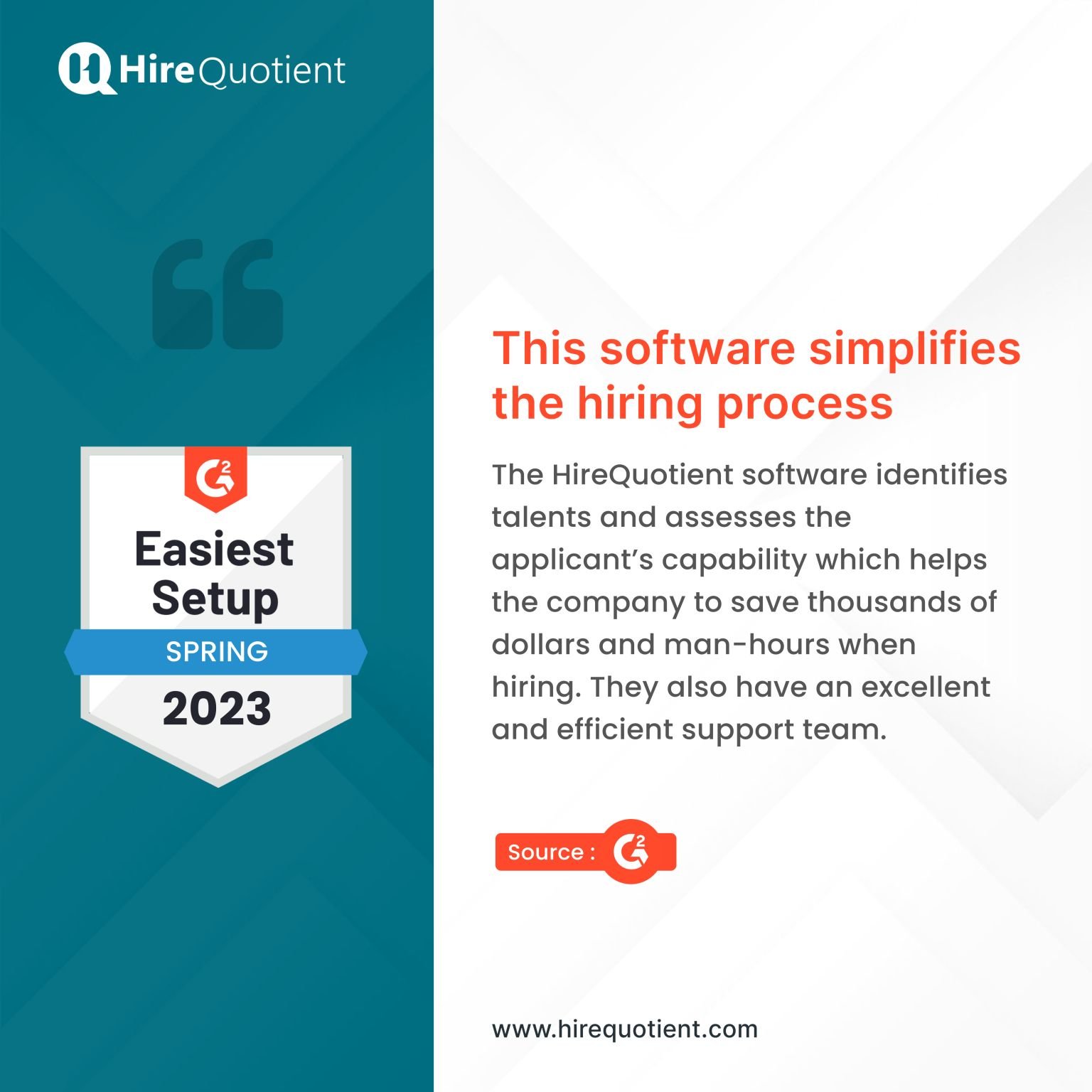
2. G2 Recognition (Spring 2023): Multiple badges, includingHigh Performer and Easiest To Use.
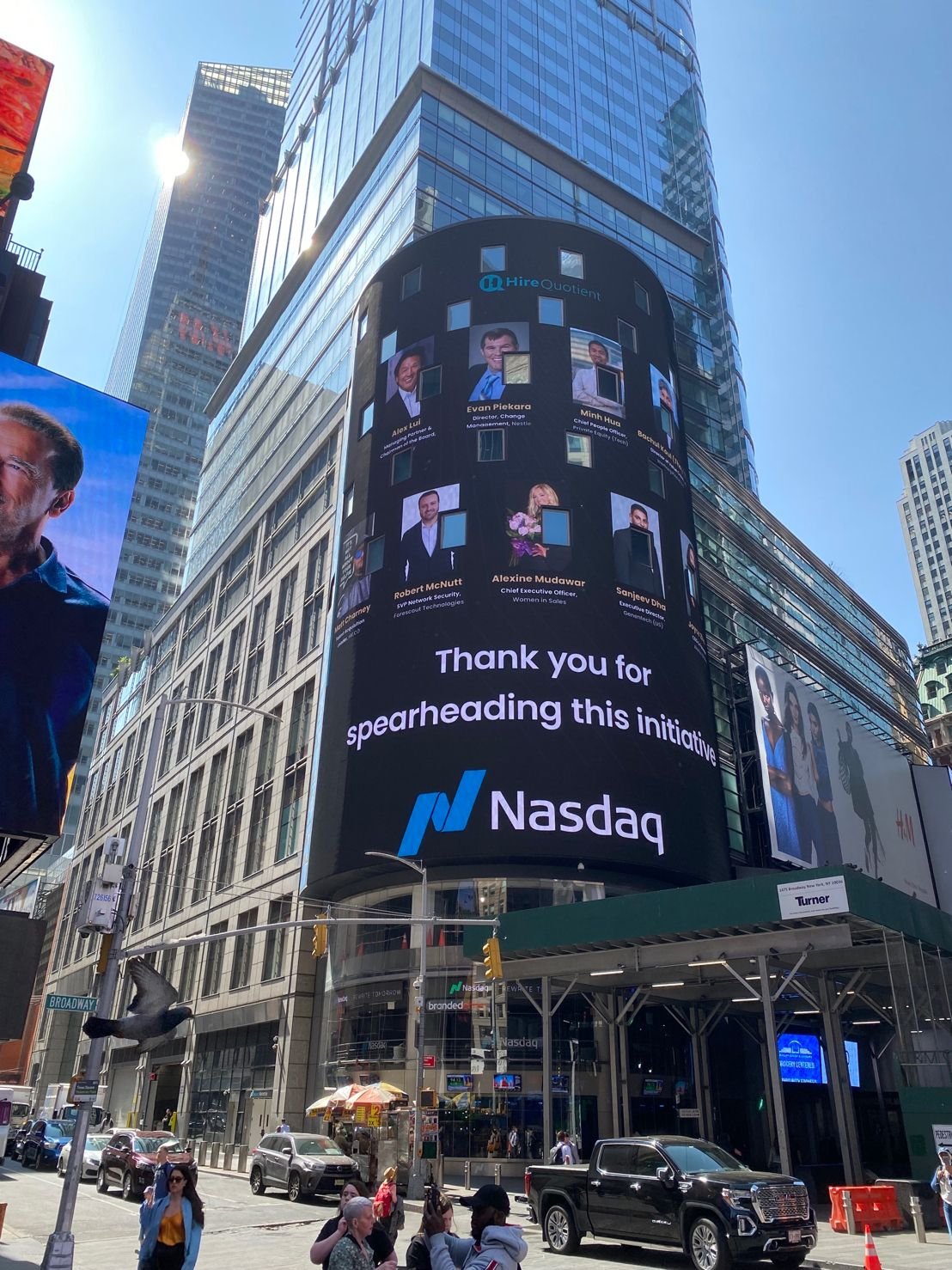
3. Industry Milestone: Featured on the NASDAQ Tower.
Conclusion & Senior Product Designer Context
EasySource is a testament to successful design leadership and execution within a high-growth startup. My role as the founding designer meant owning the complete product experience and visual ecosystem, from high-level strategic alignment and brand definition to the granular design of complex B2B features, empowering recruiters to become the SUPERSTAR OF YOUR RECRUITING STORY. This project demonstrates my expertise in:
1. Product Ownership: Successfully translating PRD requirements and formative research into a functional, revenue-generating MVP.
2. Cross-Functional Leadership: Guiding a lean team (1 PM, 1 Designer, 2 Engineers) to deliver a complex, integrated product under tight deadlines.
3. System Thinking: Designing a scalableDesign System (HQ Core) that allowed the product to grow rapidly and maintain consistency and quality.
The result is a disruptive product that delivers massive, quantifiable ROI, confirming my ability to drive product success and lead complex design decisions at a senior level.

 Lets Talk